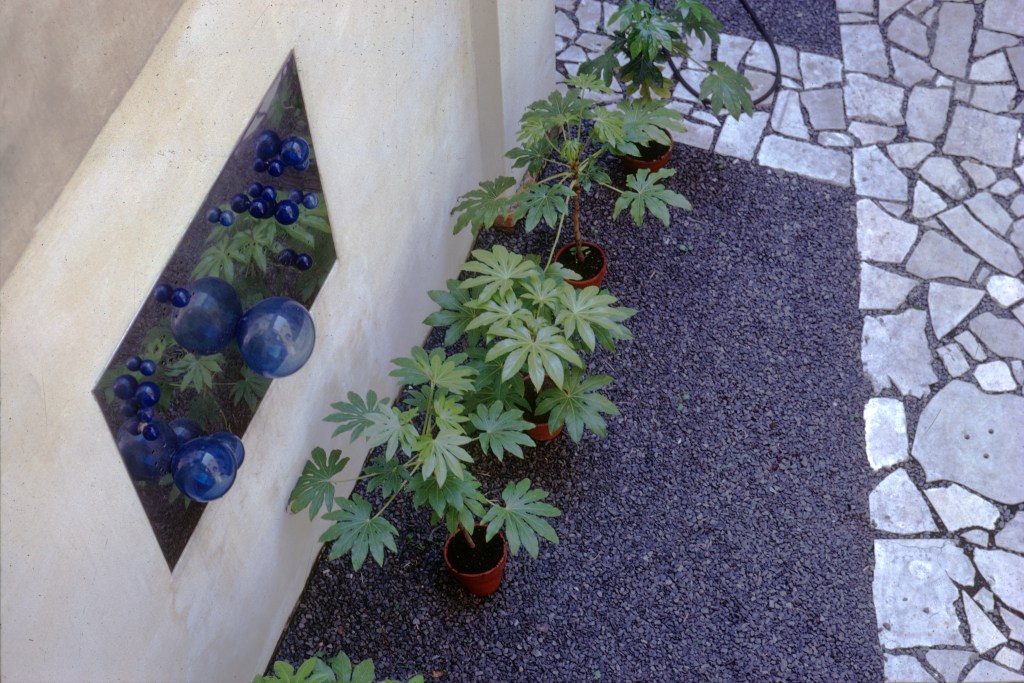
A tiny courtyard in Venice is paved with diagonal patterns of contrasting surface textures coming alive with color from an extraordinary chrome panel displaying blue bubbles that float and greenery, both embellished by their reflections.
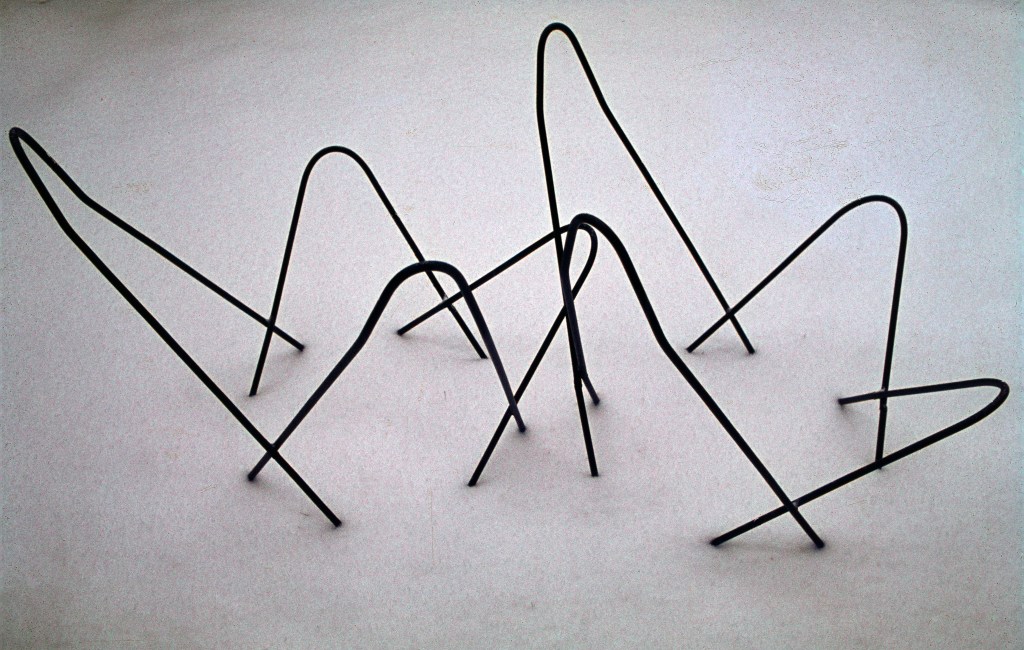
The 1930s butterfly chair designers worked with Le Corbusier and the chair design was celebrated by Edgar Kaufmann, Jr. who bought one for his similarly celebrated country home, “Fallingwater”, designed by Frank Lloyd Wright.
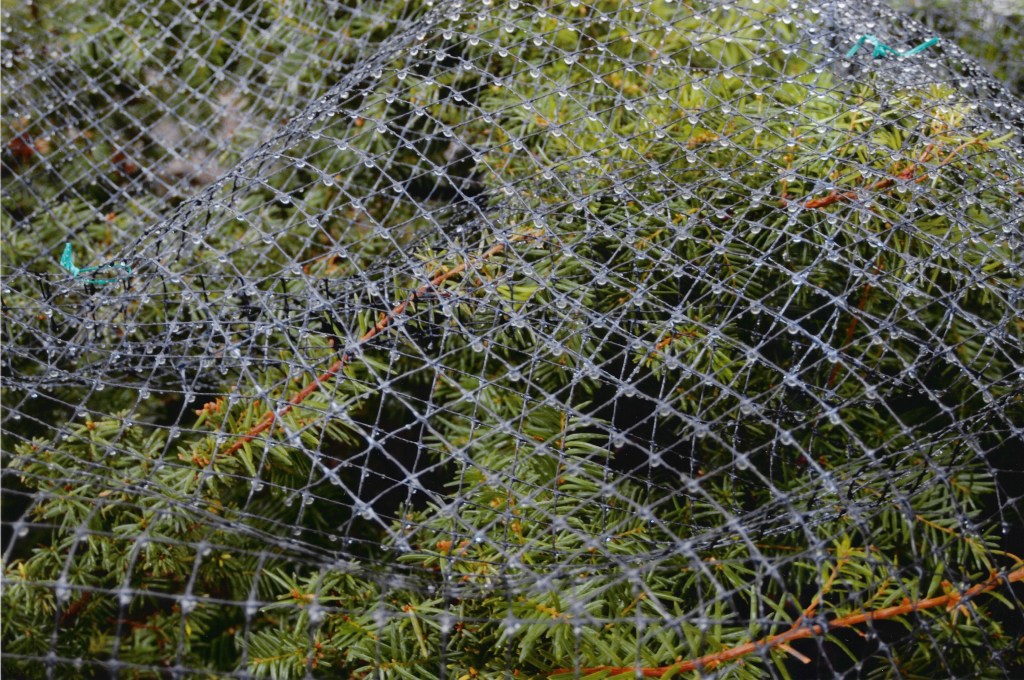
A tiny bead of life-giving water occupies every crossing point on the net grid, soon to replenish the lush, enveloped evergreens inside.
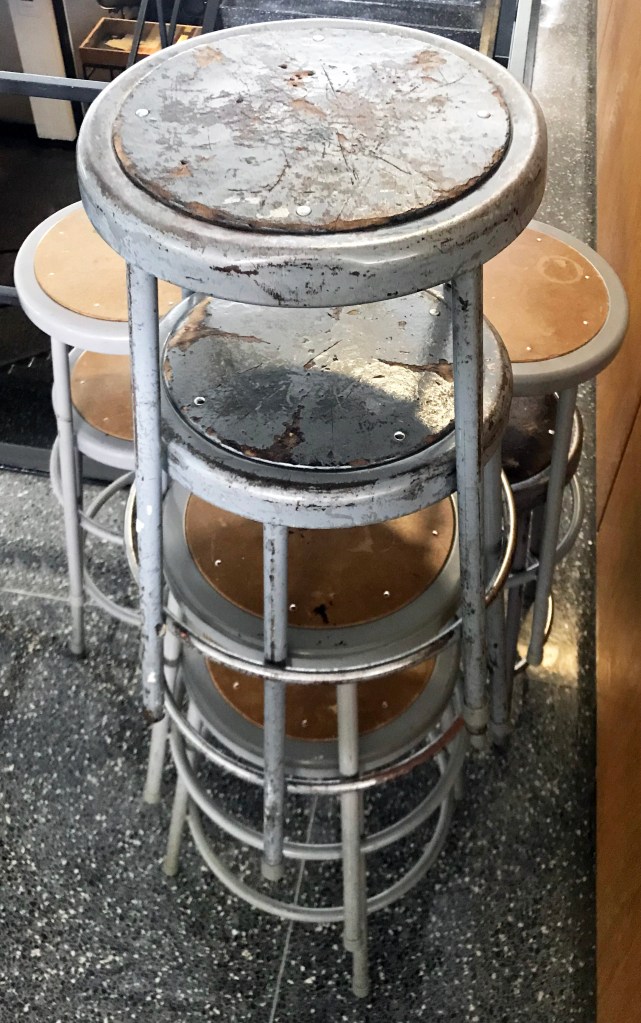
Many famous engineers first learned efficiency in their trade while studying among each other on minimalist seating, effectively stacked up between users to conserve space.
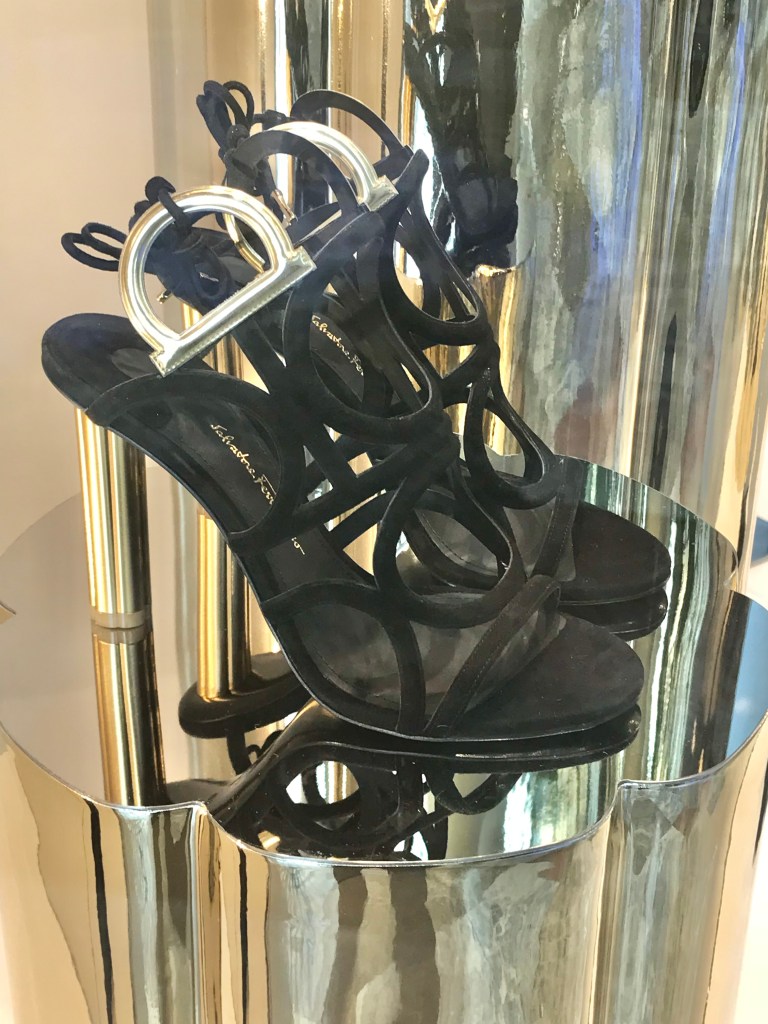
A lofty mirrored pedestal dramatizes and glorifies the lofty embracing footwear, mutually reinforcing their presence, and combining into a sculpture without revealing where each segment begins, ends, and supports the others.
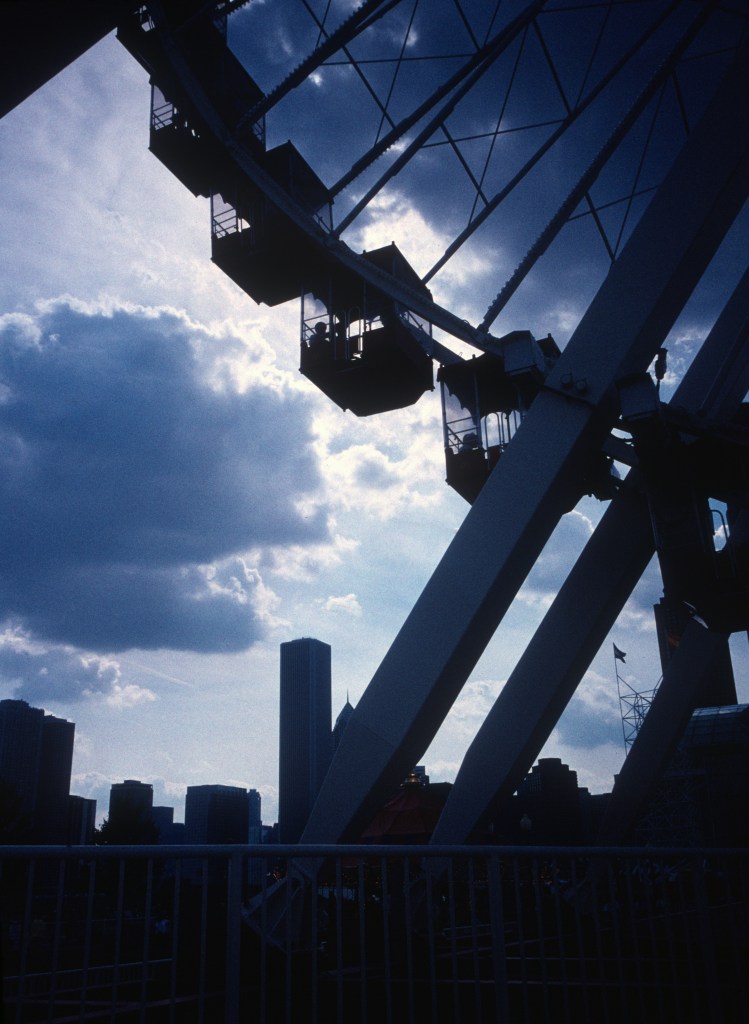
The huge wheel’s dominant presence overshadows, overwhelms, and commands the Downtown skyscrapers.
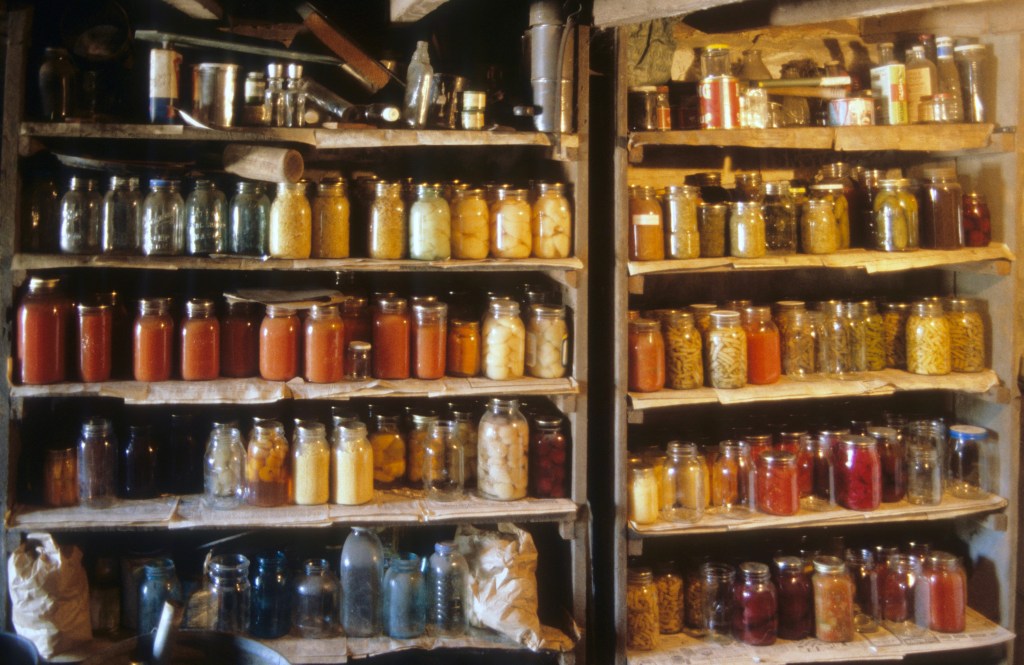
Laudable efforts went in to cooking and storing so much of nature’s bounty, leaving abundant choices throughout the winter. Daylight brightens the colors and textures of the ingredients in the jars, receding into dark shadows behind.
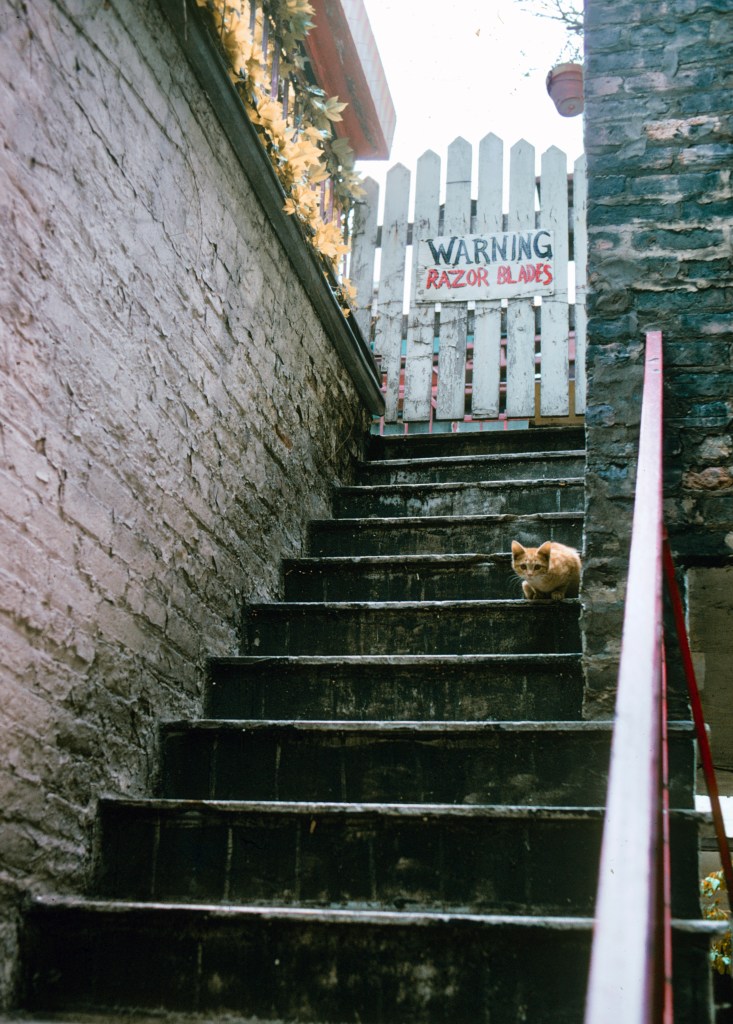
The cat’s intense stare attempts to instill fear in anyone thinking of climbing up the diagonal stairs and passing through the substantially more frightening gate above.
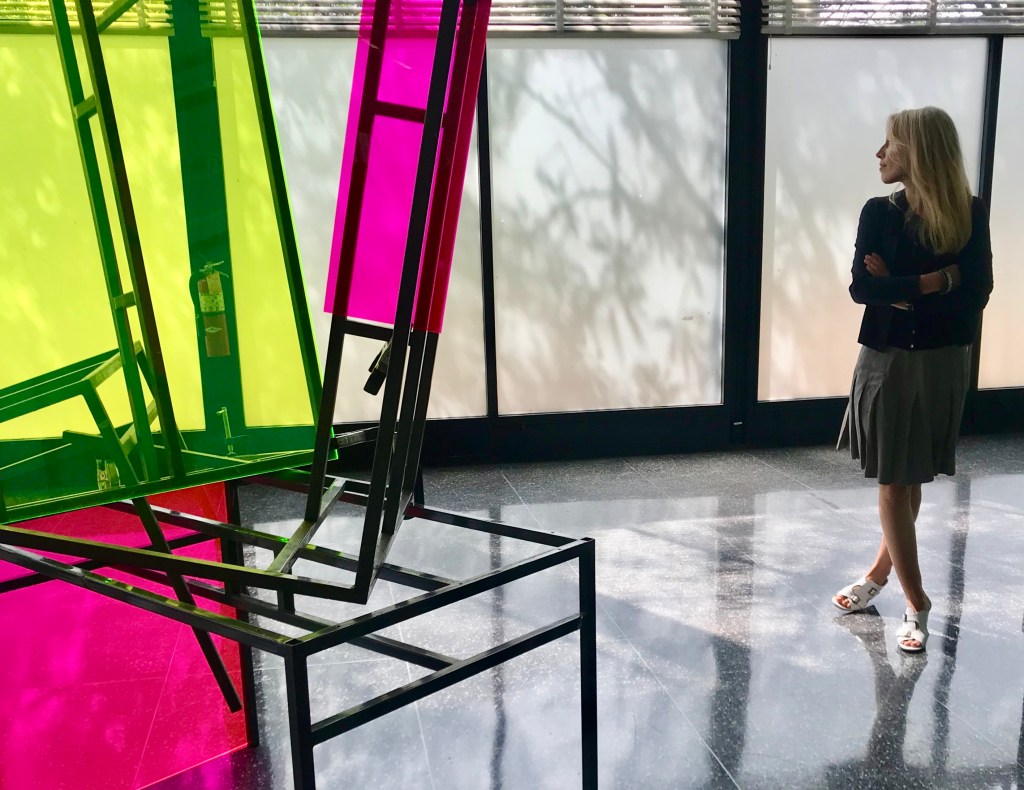
A woman’s crossed arms and crossed legs appear to subconsciously mimic the crossing forms of the sculpture. Silhouettes of plant life on the frosted glass, reflected on the floor, provide mellow relief from the harsh geometrics.
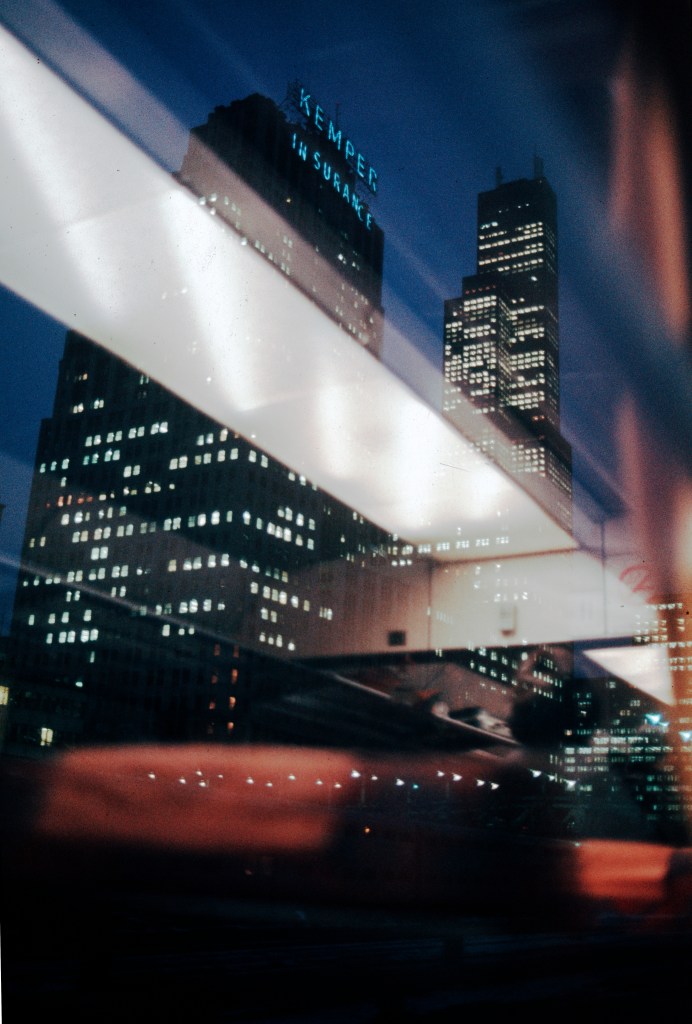
Passengers arriving by train enjoy a first impression of hundreds of glowing lights on tall, bold, diagonal skyscrapers, reinforced by the diagonal Kemper sign and the diagonal reflection of the overhead lights on the train.
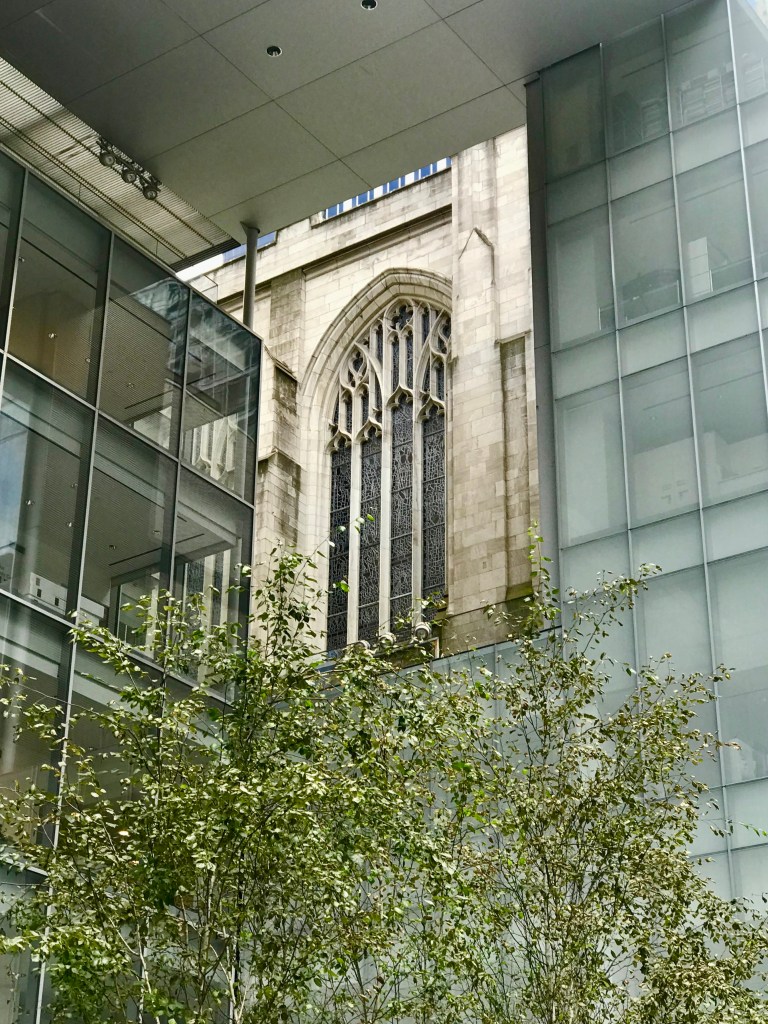
The bland anonymity of the Miesian modern curtainwalls surround the opulent gothic window to which the eye is drawn. Mies asserted: “Less is more”. Architect Robert Venturi countered: “Less is a bore”.
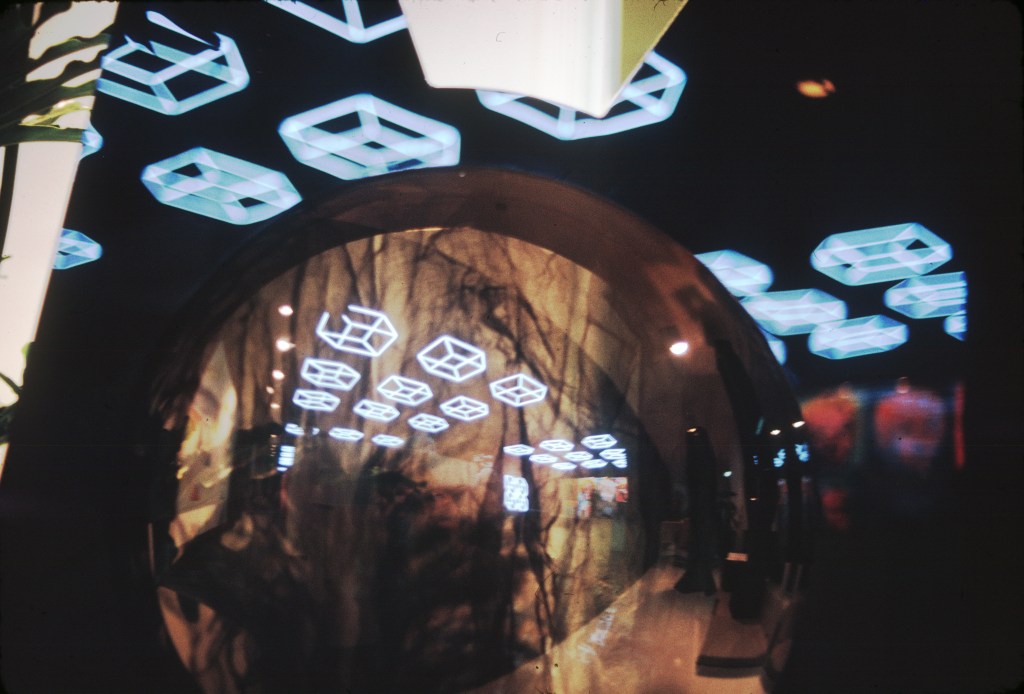
Fluorescent neon boxes light a showroom, reflected, and deformed through a glass globe, which tints the bluish neon into a comforting, incandescent spectrum, evoking, a familiar song lyric: “Which is right and which is an illusion?”.
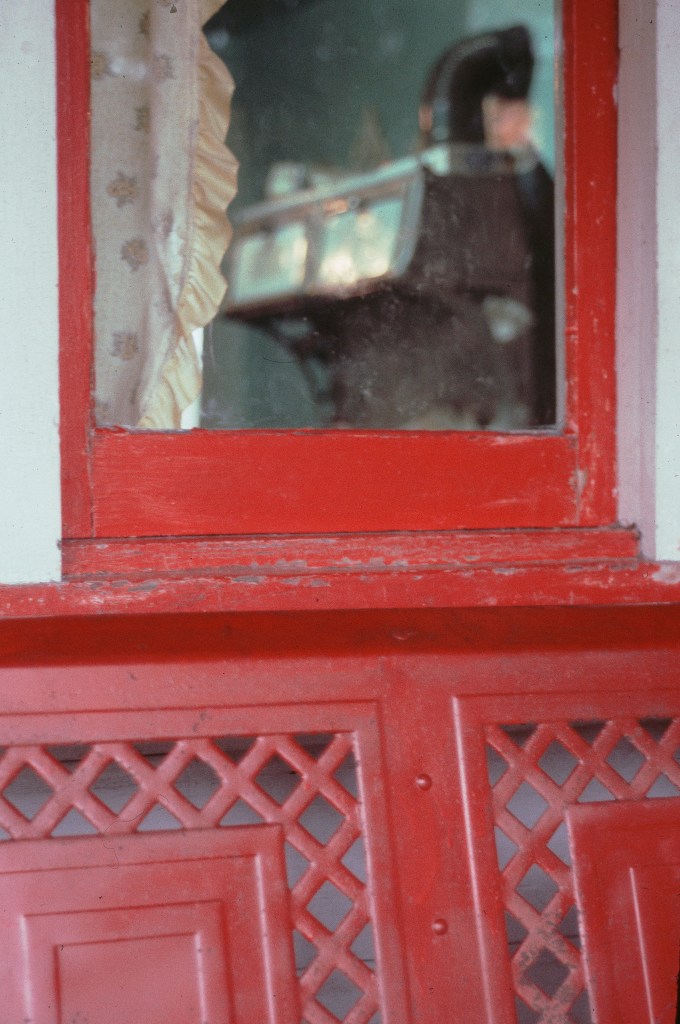
The antique stove is apparently still in use, while viewed dreamily out-of-focus as a memory from the distant past. The bright, bold, red window frame and porch swing attempt to cheerily diminish the sadness of a bygone era.
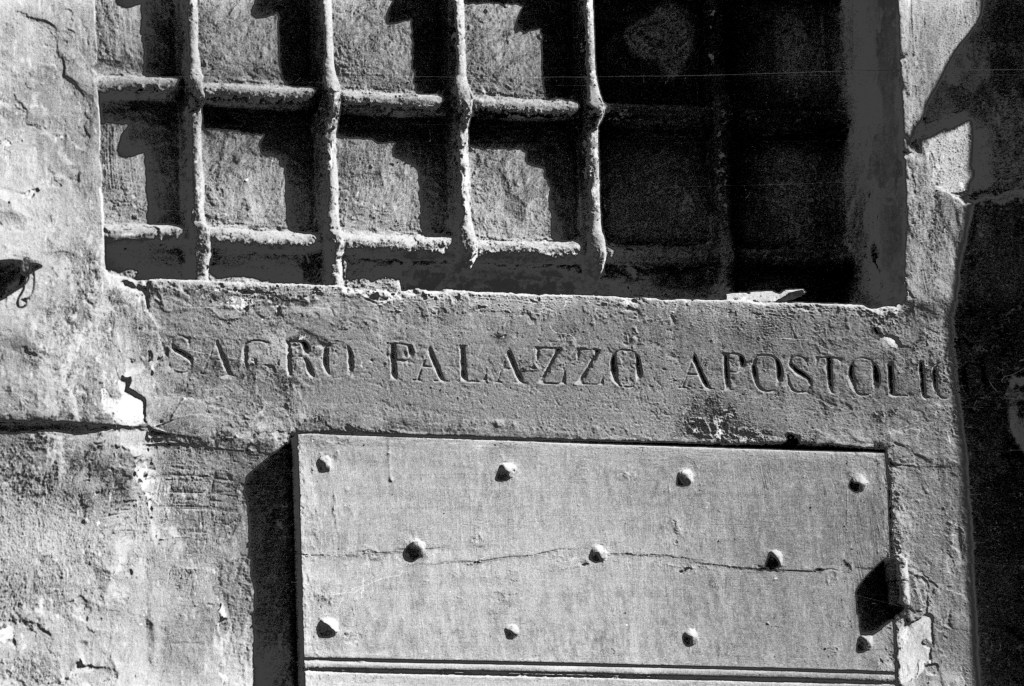
Delicate calligraphy can’t assert its presence in the context of bold rough stone, wood, and iron textures on an ancient door.
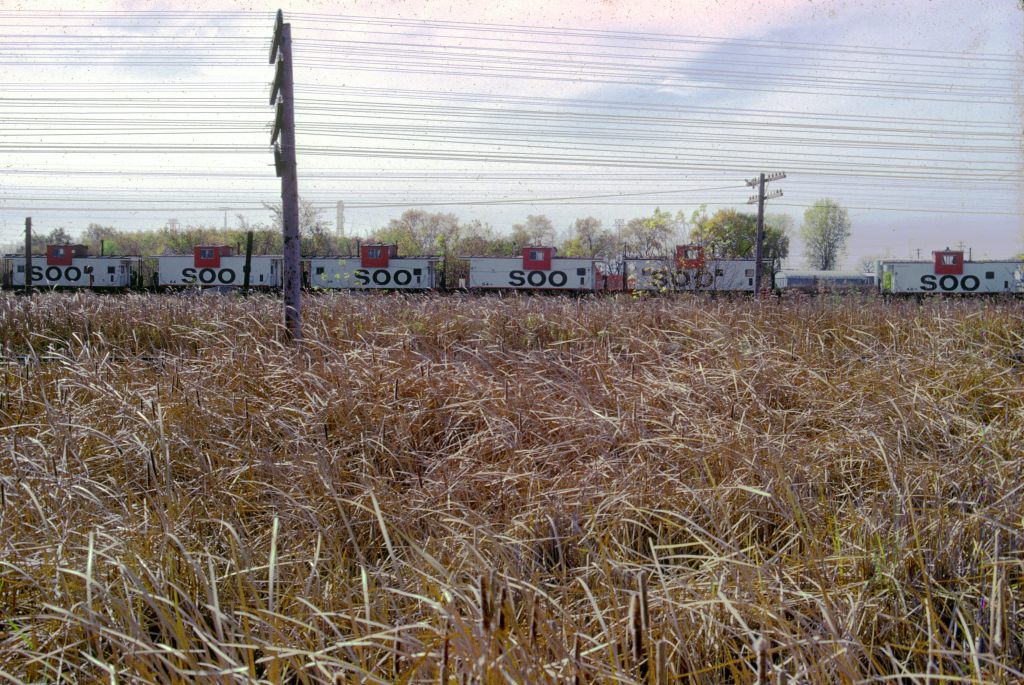
Large, repetitive lettering on a line of railcars assert a strong presence, complementing the other images of horizontal movement from countless wires and wind-blown grasses.
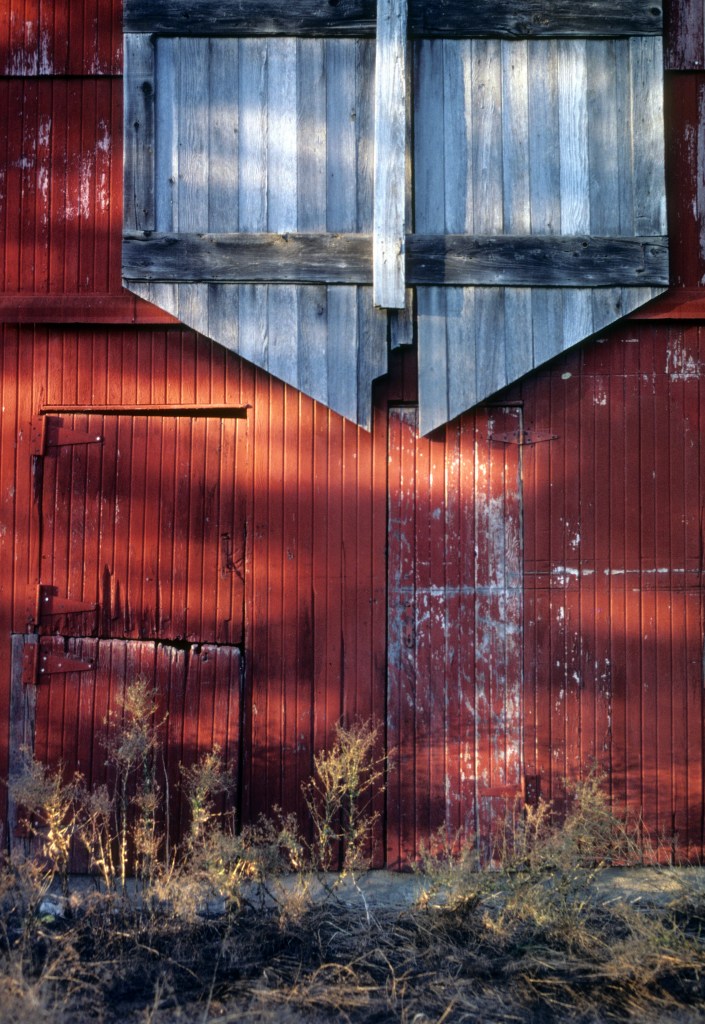
The barn’s rough texture is cheerful in red paint despite the deteriorating door and white patches of erosions from active use. The sharp angular bottoms of the gray loft doors point downward, to shield the red façade from further damage.
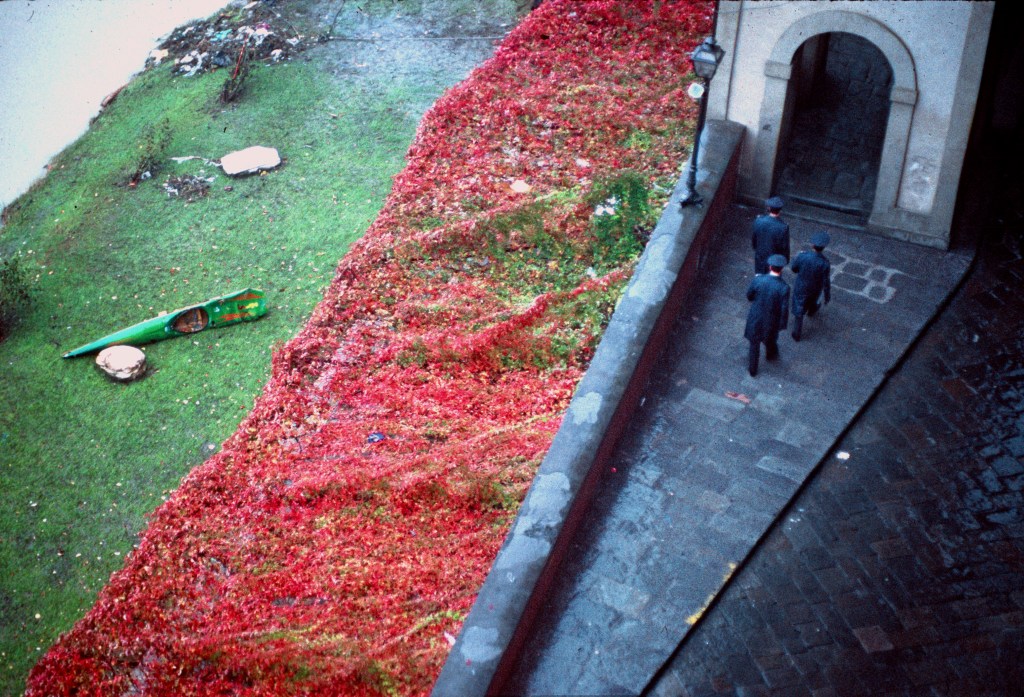
This view from above reveals colorful triangular geometrics consisting of blue sidewalk stones, three navy-colored soldiers, a broken green kayak, the river’s edge, and bright red ground cover tapering as it extends up and off the image.
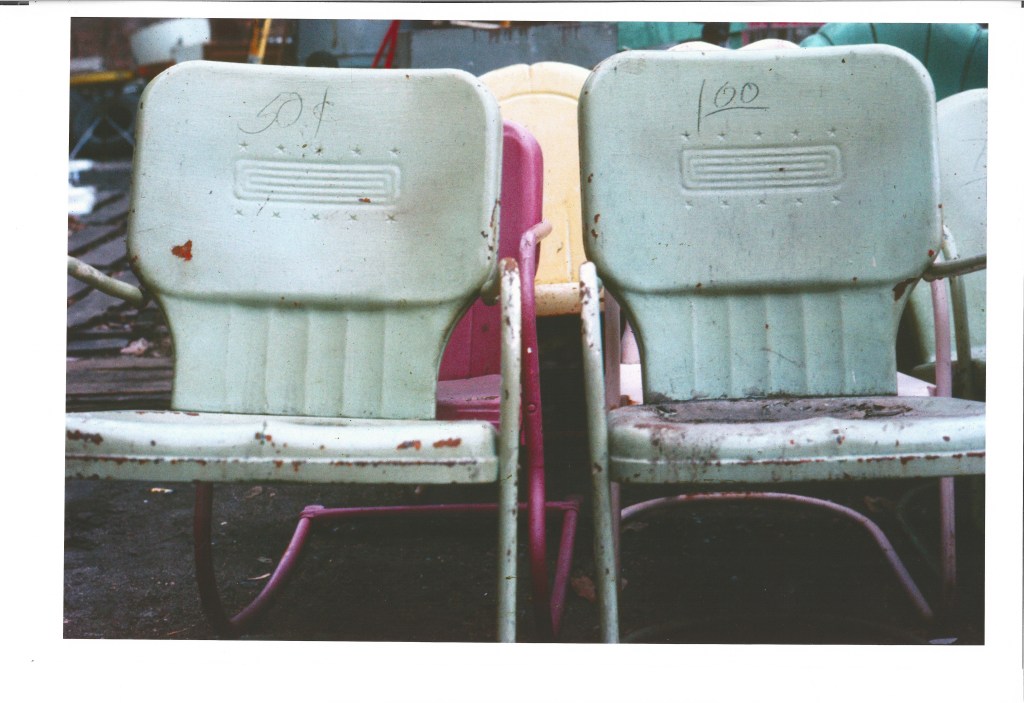
One of the green metal chairs is being offered at twice the price of the other for reasons not evident. The soothing pink and yellow pastel-colored chairs hidden behind invite a contextual exploration for the pricing rationale.
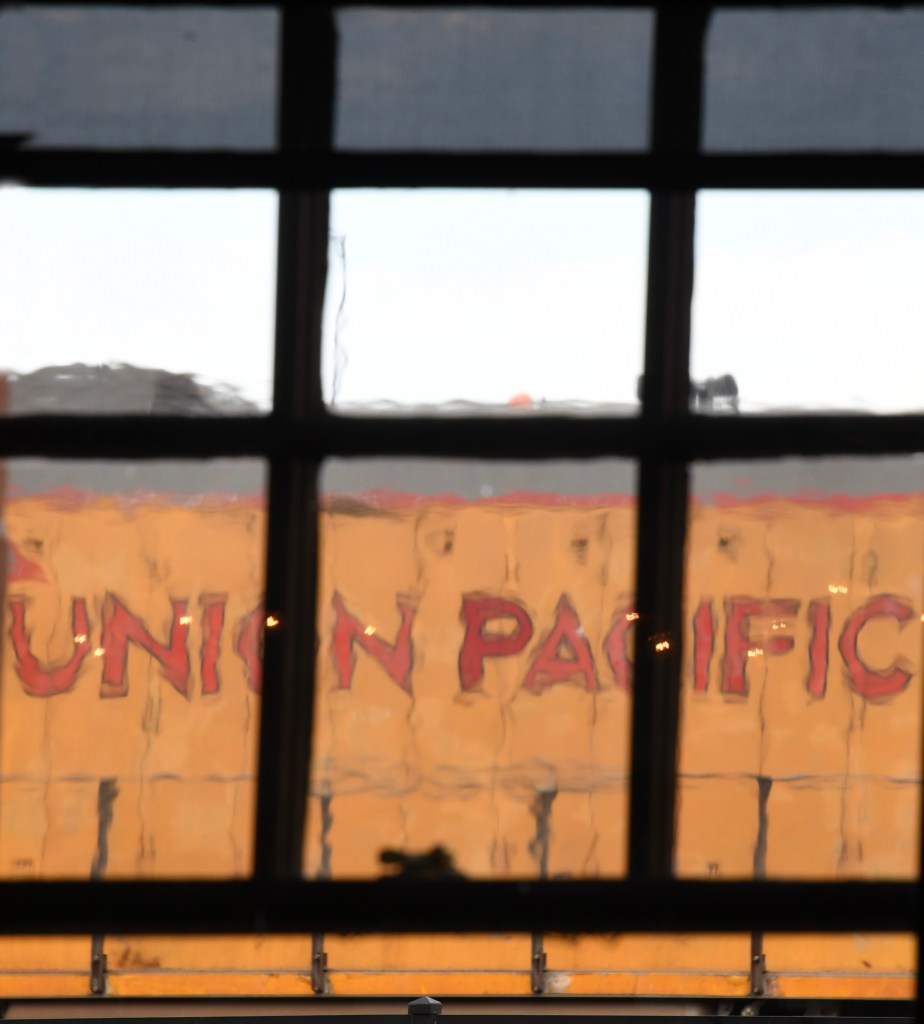
Bold lettering forms with primary colors are a fixed to the sides of a moving locomotive, suggesting the company’s solid reliability. In contrast, viewed through ripple glass, the lettering forms are distorted and appear unstable.

